
'I am innocent,' imprisoned Chinese journalist Dong Yuyu says in plea for press freedom
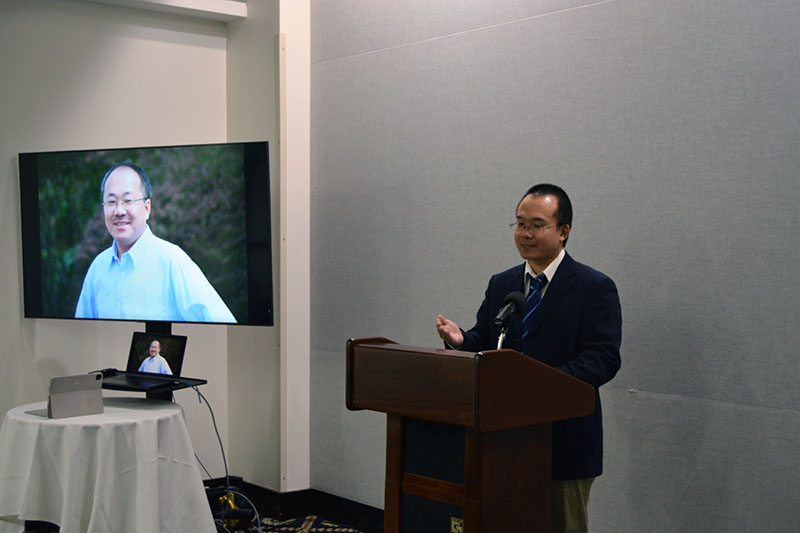
Chinese journalist Dong Yuyu, imprisoned in Beijing on espionage charges that rights groups say are politically motivated, delivered a powerful message at the National Press Club’s Press Freedom Center on Monday, declaring his innocence and warning of the dangers posed by China’s tightening grip on information and foreign exchange.
“I am innocent,” Dong said in remarks read aloud during the Nov. 17 event, his first public statement since the Beijing High Court upheld his conviction earlier this year. “This case is not about justice. It is about silencing voices that speak freely, and it is about warning others not to engage with the outside world.”
Dong, a longtime editor at Guangming Daily and contributor to international outlets, including the New York Times, was arrested in 2022 shortly after the Beijing Winter Olympics while dining with a foreign diplomat. The diplomat was released, but Dong was charged with espionage, a crime that carries severe penalties in China. His appeal was delayed for nearly a year before being rejected, leaving him to serve a seven-year sentence. He is expected to remain in prison until 2029 unless granted early release.
At the Club event, Dong’s son, Yifu, spoke on behalf of the family, describing the ordeal as both a personal tragedy and a broader assault on press freedom. “My father’s case shows how easily normal interactions with diplomats, scholars, or journalists can be turned into accusations of spying,” Yifu said. “It criminalizes the very idea of exchange and dialogue.”
Dong’s words, delivered through his family, carried a sharp warning about the precedent his case sets. “If meeting a diplomat can be called espionage, then any citizen who talks to foreigners is at risk,” he said. “This is not just about me. It is about the future of journalism, scholarship, and diplomacy in China.”
The Press Freedom Center, which honored Dong with its President’s Award earlier this year, convened the event to spotlight his case and call for international support. Bill McCarren, the center’s director, said Dong’s detention reflects a broader pattern of repression. “China is using national security laws to silence independent voices,” McCarren said. “Dong’s case is emblematic of the dangers faced by journalists who dare to speak freely.”
The appeals process, according to Dong’s family, was marked by repeated delays and a lack of transparency. Courts rejected defense arguments without explanation, relying solely on determinations by China’s State Security agency. Japanese diplomats involved in the case were labeled spies, despite letters from the Japanese ambassador refuting the claim. No action was taken against the diplomats themselves, underscoring what advocates call the political nature of the charges.
“The judgment was not based on evidence,” Dong said in his statement. “It was based on fear — fear of ideas, fear of dialogue, fear of truth.”
Dong’s detention has taken a heavy toll on his family. He has been denied phone calls and in-person visits, with only limited letters exchanged. His health has deteriorated after three years in a Beijing detention center, where he has been reported pale and lacking sunlight. At 63, he suffers from liver issues and faces worsening conditions once transferred to prison.
“My father shouted in court, ‘I am innocent,’” Yifu recalled. “We shouted back, ‘Shameless.’ The judges had no response. That moment showed us the truth — this is not about law, it is about power.”
The case has sparked concern among diplomats, academics, and journalists who fear it will discourage people-to-people exchanges. Attendance at foreign embassy cultural events in Beijing has already declined, according to Yifu. Scholars returning from overseas fellowships worry that legitimate awards could be portrayed as illicit benefits.
“This case is meant to send a message,” Dong said. “The message is: do not speak, do not meet, do not think freely. But I refuse to accept that message.”