
Europe and US must adapt rapidly to counter global threats, NATO commander tells NPC
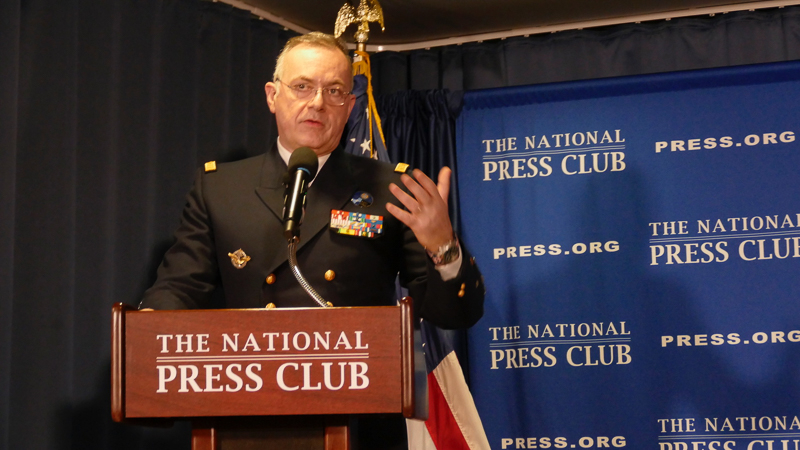
The United States and Europe must make rapid military advancements to counter threats from Russia and China, Admiral Pierre Vandier, NATO’s Supreme Allied Commander Transformation, told the National Press Club at a Headliners Luncheon on Tuesday, Feb, 10, 2026.
Vandier is one of NATO’s most senior military commanders, overseeing the alliance’s transformation headquarters based in Norfolk, Va. During a discussion moderated by former NPC President Jen Judson, Vandier shared his views on the current state of the alliance and how it must adapt for global security.
“The industry question is really a big one. I think the US, and particularly this administration, have taken the question very, very seriously. We inherit an industrial system that has not been prepared for war,” Vandier said.
He stressed that European and American military and industrial efforts combined can outpace adversaries.
“We have a collective security problem. So that means we need a collective endeavor to solve this problem,” he told reporters. “We are in a race especially with China, and so we need the skills and the knowledge of the two sides of the Atlantic to face this challenge.”
Vandier explained that drone production is profoundly changing the way that battles are being fought and will be in the future because of omnipresent surveillance.
“We’ve seen an increased lethality of the zone of contacts on the battlefield,” he said with regard to drones. “The ability to concentrate forces is very limited. Surprise is difficult. This permanent surveillance is something which is a change. We know for example that command posts are targets, even in depth. So today the way we work a command post has to change.”
He said that speedy adaptation on the battlefield and within the defense industry will be critical to NATO’s role in helping to safeguard both European countries and the United States from adversaries worldwide. To do this, Vandier said, both the military and industry “need to shortcut to adapt, to find new procedures, to break some roadblocks.”
“The most expensive commodity today is time,” he said. “Do we have time? I don’t think we have that much time.”