
Climate activist calls for biggest polluters to compensate climate change victims

Climate activist and United Nations Goodwill Ambassador Vanessa Nakate called on major polluters and world institutions to “do the right thing” and compensate the victims of climate change during a National Press Club Newsmaker press conference on Friday.

Nakate, a Ugandan activist who visited communities affected by Hurricane Ian and then traveled to Washington for meetings at the World Bank and International Monetary Fund, among others, said the impacts of climate change are most keenly felt by poorer countries that are responsible for less of global emissions. These climate impacts include floods, drought and crop failure.

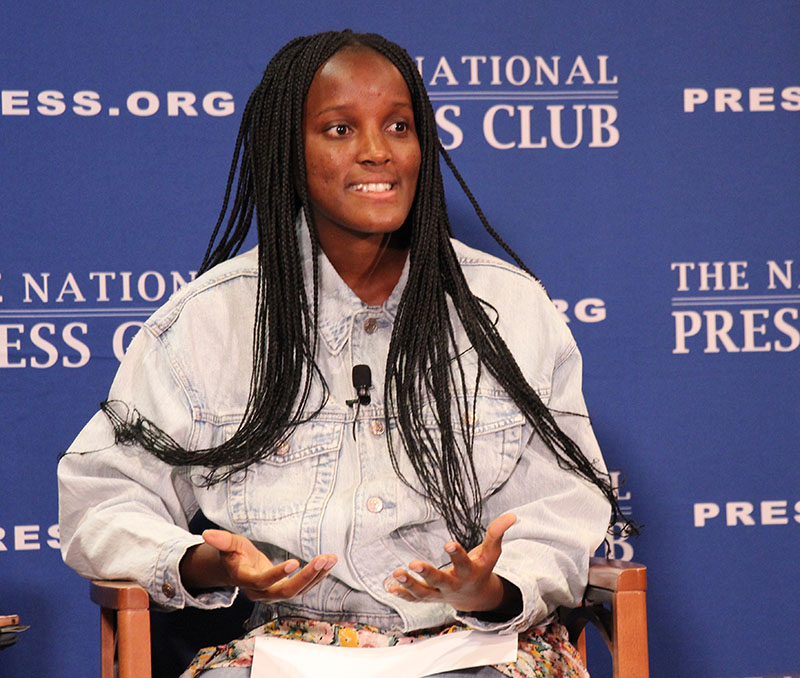
Climate activist Vanessa Nakate visited Hurricane Ian victims before coming to Washington. Photo: Aileen Roberta Schlef

“Time and time again, the urgent call for a fund for loss and damage has been kicked down the road at major climate summits,” Nakate said. “But countries like Pakistan lie underwater, and countries in East Africa lie on the edge of famine. People are starting to wake up to the fact that these countries did not cause this crisis, but they are having to pay the bill for it.”

Climate negotiators have tried to earn “loss and damage” compensation for countries most affected by disasters that result from climate change from countries that are the biggest greenhouse gas contributors, such as the U.S., Russia, China and the European Union. But they have so far been unsuccessful, something Nakate said must change as preparations are underway for the United Nations Climate Change Conference next month in Egypt.
“We need to remember this isn’t just about balance sheets,” she said. “It’s about people -- real people like me. It’s about our livelihoods and lives.”

Nakate also called on the IMF, World Bank and others to “double down” on financing renewable energy projects for Africa, which she said could help transform the continent’s economy. Such projects would reduce emissions, she said, and provide 600 million people in sub-Saharan Africa with electricity.

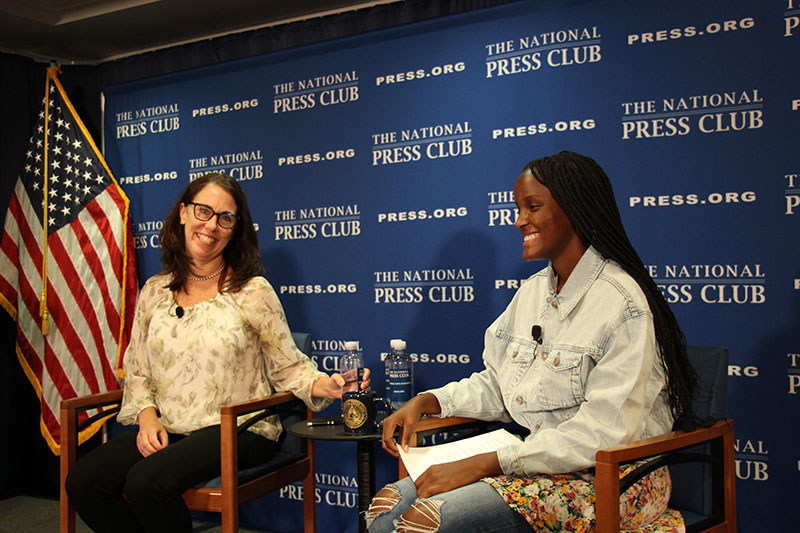
Former Club President Alison Fitzgerald Kodjak moderated the discussion with Nakate. Photo: Aileen Roberta Schlef

Nakate has been at the forefront of climate protests in Africa, as she started a solitary strike against climate change inaction outside the Parliament of Uganda. She then founded the Rise Up Movement, which brings together young people across Africa to protest for climate action.

But the movement to fight climate change still faces obstacles. World Bank President David Malpass recently failed to acknowledge the role that burning fossil fuels plays in warming the planet, remarks that prompted some to call for his resignation and accuse him of being a climate change denier.

Nakate said climate change deniers “block themselves from the reality of what is happening” despite the overwhelming scientific consensus, and the reality on the ground that has brought the collapse of agriculture and the displacement of thousands of people already amid rising sea levels.

“In my part of the world, farms are collapsing, livestock are perishing, and people are starving,” she said. “But here in one of the most powerful cities on the Earth, I see climate denial is still allowed to exist, even at the top of global institutions.”